Join CHRONOHOLIC today!
All the watch news, reviews, videos you want, brought to you from fellow collectors
All the watch news, reviews, videos you want, brought to you from fellow collectors
%20(1).jpeg)
Most days do not announce themselves.
They begin with small arithmetic. The kettle. The tram. The office ledger opened to the correct page. A watch consulted not because history is waiting, but because the morning is. Time moves in increments so modest they barely register. A minute is a courtesy. An hour, an agreement.
There are mornings that hold the minute like treasure. A nurse notes the time of the first cry. A registrar inks the minute two names become one. Somewhere, a ship slides into water and someone records the second she answers her helm. The hour a child stepped across a stage to collect a degree.
But then, there are those that fracture a life. A diagnosis. A telegram. A knock at the door. The clock continues, but it no longer feels neutral. There are also moments when time ruptures at scale. When a village is divided into before and after. When a generation carries a date like a scar. And then, there are those handful of mornings when the fracture does not belong to a man, or a city, or even a nation. When that rupture changes the very fabric of history.
A watch, impartial in its arithmetic, records them all. Without preference or judgment.
A little past 8, the clocks in Hiroshima were behaving normally.
The Ledger of a Common Life
Kengo Nikawa was fifty-nine years old.
On the morning of August 6, 1945, he was near the centre of Hiroshima. It was a working day. He carried a silver pocket watch, a gift from his son. He had likely checked it, as he would have on any other morning, to see whether he was on schedule to the assigned workplace demolition site.
When the bomb fell, the watch stopped.
For most lives, fifteen minutes past eight is unremarkable. A cup of coffee. Perhaps a commuter train to catch.
For Nikawa, it was the moment he occupied space. And also, the one he did not.
Kengo Nikawa’s recovered watch
The watch was later recovered from the debris. Its glass shattered, hands melted in place, and dial scarred forever.
It no longer told time. But it marked the fracture precisely.
Today, the watch rests in the Hiroshima Peace Memorial Museum. The hands remain at 8:15.
The Shadow of a Father
Nineteen-year-old Shinji Mikamo and his father were on the roof of their home. A little over a kilometre from the epicentre.
The bomb fell. Miraculously, they both survived the initial blast. Then moved through the city looking for help. Joined others along the banks of the Kyobashi. Later, they were taken to a temporary hospital, where the father succumbed to his injuries.
Three months later, able to walk again, Shinji returned to where his house had once stood. There was little left. Timber and tile had given way to ash.

Melted hands showing 8:15
Scouring through the debris, he found his father’s pocket watch.
The hands had melted. On the dial, the ghost of 8:15 remained. Like the shadows left on stones across the city, the dial carried the shape of the last ordinary minute that a father and son had shared.
The watch did not move forward. Shinji did.
The Witness of Grief
Tsutomu Yamaguchi was an engineer.
On the morning of August 6, 1945, he was in Hiroshima on business. He was near the shipyards when the bomb detonated. He survived and returned to his home in Nagasaki two days later.
On August 9, at 11:02 AM, while Yamaguchi was describing the blinding white flash of Hiroshima to a co-worker, a second bomb fell. He survived again.
Tsutomu Yamaguchi
Yamaguchi was a man trained in tolerances. In systems. In mechanisms designed to function within limits. Yet the events he witnessed and endured exceeded every limit he had known.
His watch did not record the scale of what occurred. It stopped at neither 8:15 nor at 11:02. In the time that followed, when the distinction between minutes and miracles becomes difficult to measure, the hands of his watch continued to move.
Hours passed. Days followed.
It is unclear whether time carried him forward or whether he carried time.
The Peace Clock
In the Hiroshima Peace Memorial Park, there is an installation.
The tower is made of granite, barely three metres tall. Placed atop the tower is a round clock that shows the current time. Installed in 1967 by Seiko, the clock measures time in units of resilience. The white dial of the clock bears the shadow of time stopped at 8:15.
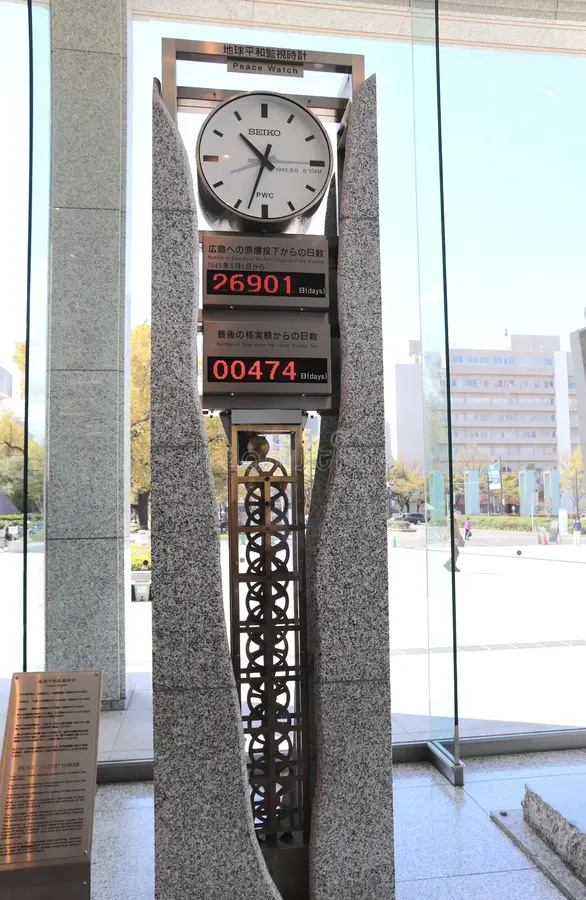
Peace Clock by Seiko
Every morning at precisely that moment, a single tower chimes a single bell. The sound moves through the air and slowly dissolves. But nothing really changes. The Kyobashi does not pause. The city does not freeze. Conversations continue to follow the existing rules of punctuation.
Beneath the clock, a digital counter records the days since the last nuclear test. The number rises. One day at a time.
But the day somewhere in the world, a country decides to conduct another fission test, it resets. It cannot argue with the story we decide to write for ourselves. And it isn’t ambitious enough to attempt repairing what has already been destroyed.
Instead, it simply accumulates the days. The disappointing arithmetic of lessons learnt and then forgotten.
The Hiroshima Peace Archive holds well over a hundred timepieces from August 6, 1945, many stopped at 8:15, though only a handful are on display at a time. Nagasaki’s Atomic Bomb Museum likewise preserves watches frozen at 11:02, the moment the second bomb fell.
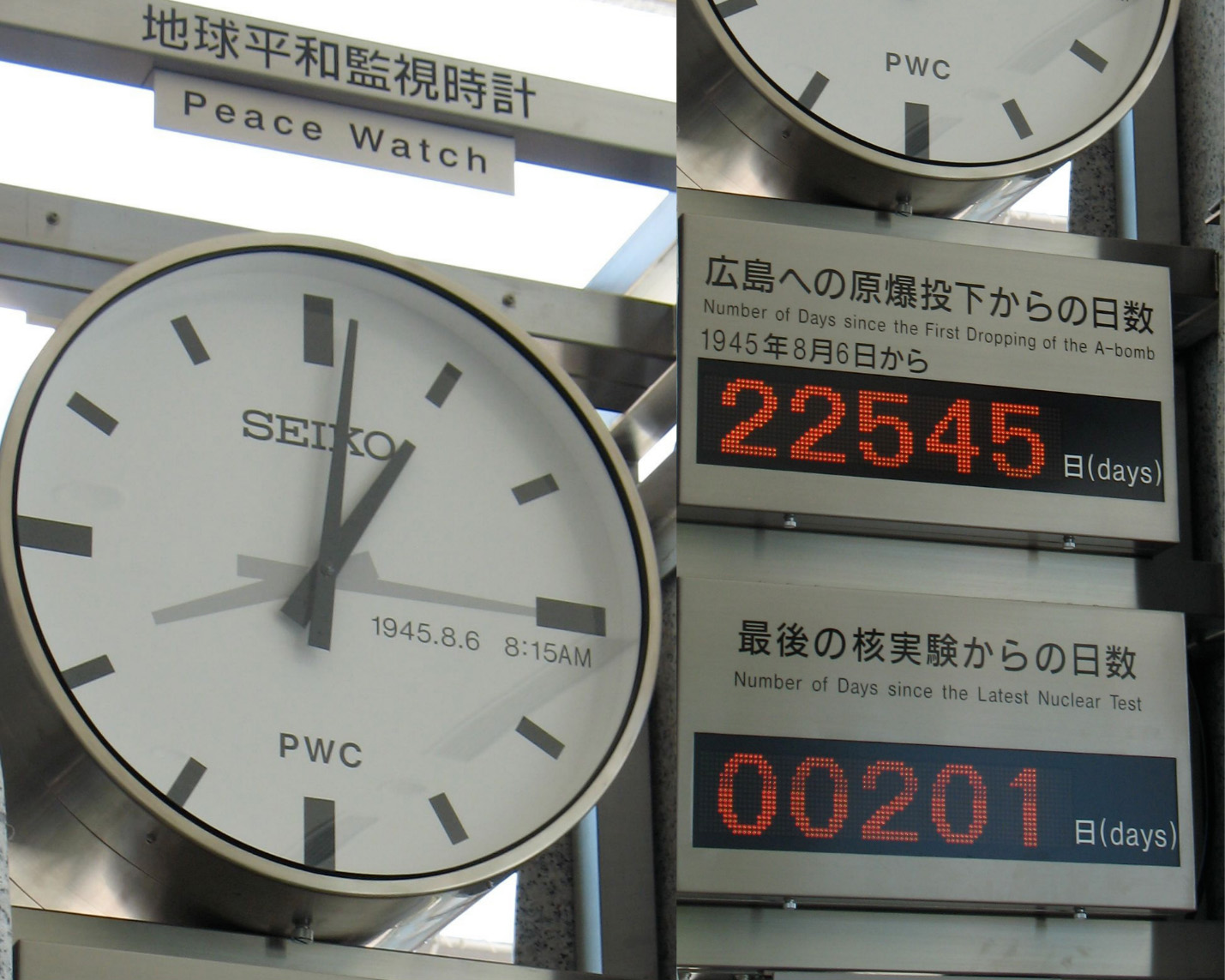
Dual Counters on the clock
For these watches recovered from the aftermath, time is a wound. Two sharp cuts that hold the hour and the minute without mercy or relief. They are tokens of grief, remembrance, resilience, and warning. All rolled into one.
The Peace Clock, though, is a vigil. An act of remembrance that lasts but a moment.
The bell fades.
The seconds hand continues.
On its inevitable trajectory.
We, still here, must decide how we might want that moment etched.
Most days do not announce themselves.
They begin with small arithmetic. The kettle. The tram. The office ledger opened to the correct page. A watch consulted not because history is waiting, but because the morning is. Time moves in increments so modest they barely register. A minute is a courtesy. An hour, an agreement.
There are mornings that hold the minute like treasure. A nurse notes the time of the first cry. A registrar inks the minute two names become one. Somewhere, a ship slides into water and someone records the second she answers her helm. The hour a child stepped across a stage to collect a degree.
But then, there are those that fracture a life. A diagnosis. A telegram. A knock at the door. The clock continues, but it no longer feels neutral. There are also moments when time ruptures at scale. When a village is divided into before and after. When a generation carries a date like a scar. And then, there are those handful of mornings when the fracture does not belong to a man, or a city, or even a nation. When that rupture changes the very fabric of history.
A watch, impartial in its arithmetic, records them all. Without preference or judgment.
A little past 8, the clocks in Hiroshima were behaving normally.
The Ledger of a Common Life
Kengo Nikawa was fifty-nine years old.
On the morning of August 6, 1945, he was near the centre of Hiroshima. It was a working day. He carried a silver pocket watch, a gift from his son. He had likely checked it, as he would have on any other morning, to see whether he was on schedule to the assigned workplace demolition site.
When the bomb fell, the watch stopped.
For most lives, fifteen minutes past eight is unremarkable. A cup of coffee. Perhaps a commuter train to catch.
For Nikawa, it was the moment he occupied space. And also, the one he did not.
Kengo Nikawa’s recovered watch
The watch was later recovered from the debris. Its glass shattered, hands melted in place, and dial scarred forever.
It no longer told time. But it marked the fracture precisely.
Today, the watch rests in the Hiroshima Peace Memorial Museum. The hands remain at 8:15.
The Shadow of a Father
Nineteen-year-old Shinji Mikamo and his father were on the roof of their home. A little over a kilometre from the epicentre.
The bomb fell. Miraculously, they both survived the initial blast. Then moved through the city looking for help. Joined others along the banks of the Kyobashi. Later, they were taken to a temporary hospital, where the father succumbed to his injuries.
Three months later, able to walk again, Shinji returned to where his house had once stood. There was little left. Timber and tile had given way to ash.
Melted hands showing 8:15
Scouring through the debris, he found his father’s pocket watch.
The hands had melted. On the dial, the ghost of 8:15 remained. Like the shadows left on stones across the city, the dial carried the shape of the last ordinary minute that a father and son had shared.
The watch did not move forward. Shinji did.
The Witness of Grief
Tsutomu Yamaguchi was an engineer.
On the morning of August 6, 1945, he was in Hiroshima on business. He was near the shipyards when the bomb detonated. He survived and returned to his home in Nagasaki two days later.
On August 9, at 11:02 AM, while Yamaguchi was describing the blinding white flash of Hiroshima to a co-worker, a second bomb fell. He survived again.
Tsutomu Yamaguchi
Yamaguchi was a man trained in tolerances. In systems. In mechanisms designed to function within limits. Yet the events he witnessed and endured exceeded every limit he had known.
His watch did not record the scale of what occurred. It stopped at neither 8:15 nor at 11:02. In the time that followed, when the distinction between minutes and miracles becomes difficult to measure, the hands of his watch continued to move.
Hours passed. Days followed.
It is unclear whether time carried him forward or whether he carried time.
The Peace Clock
In the Hiroshima Peace Memorial Park, there is an installation.
The tower is made of granite, barely three metres tall. Placed atop the tower is a round clock that shows the current time. Installed in 1967 by Seiko, the clock measures time in units of resilience. The white dial of the clock bears the shadow of time stopped at 8:15.
Peace Clock by Seiko
Every morning at precisely that moment, a single tower chimes a single bell. The sound moves through the air and slowly dissolves. But nothing really changes. The Kyobashi does not pause. The city does not freeze. Conversations continue to follow the existing rules of punctuation.
Beneath the clock, a digital counter records the days since the last nuclear test. The number rises. One day at a time.
But the day somewhere in the world, a country decides to conduct another fission test, it resets. It cannot argue with the story we decide to write for ourselves. And it isn’t ambitious enough to attempt repairing what has already been destroyed.
Instead, it simply accumulates the days. The disappointing arithmetic of lessons learnt and then forgotten.
The Hiroshima Peace Archive holds well over a hundred timepieces from August 6, 1945, many stopped at 8:15, though only a handful are on display at a time. Nagasaki’s Atomic Bomb Museum likewise preserves watches frozen at 11:02, the moment the second bomb fell.
Dual Counters on the clock
For these watches recovered from the aftermath, time is a wound. Two sharp cuts that hold the hour and the minute without mercy or relief. They are tokens of grief, remembrance, resilience, and warning. All rolled into one.
The Peace Clock, though, is a vigil. An act of remembrance that lasts but a moment.
The bell fades.
The seconds hand continues.
On its inevitable trajectory.
We, still here, must decide how we might want that moment etched.


.jpg)
.png)
.jpg)